THE STICKERROAR GUIDE
Printed Car Stickers vs Transfer Decals
Compare printed PVC car stickers and transfer decals, including backgrounds, fine details and application. Choose the right format for your artwork.
Updated
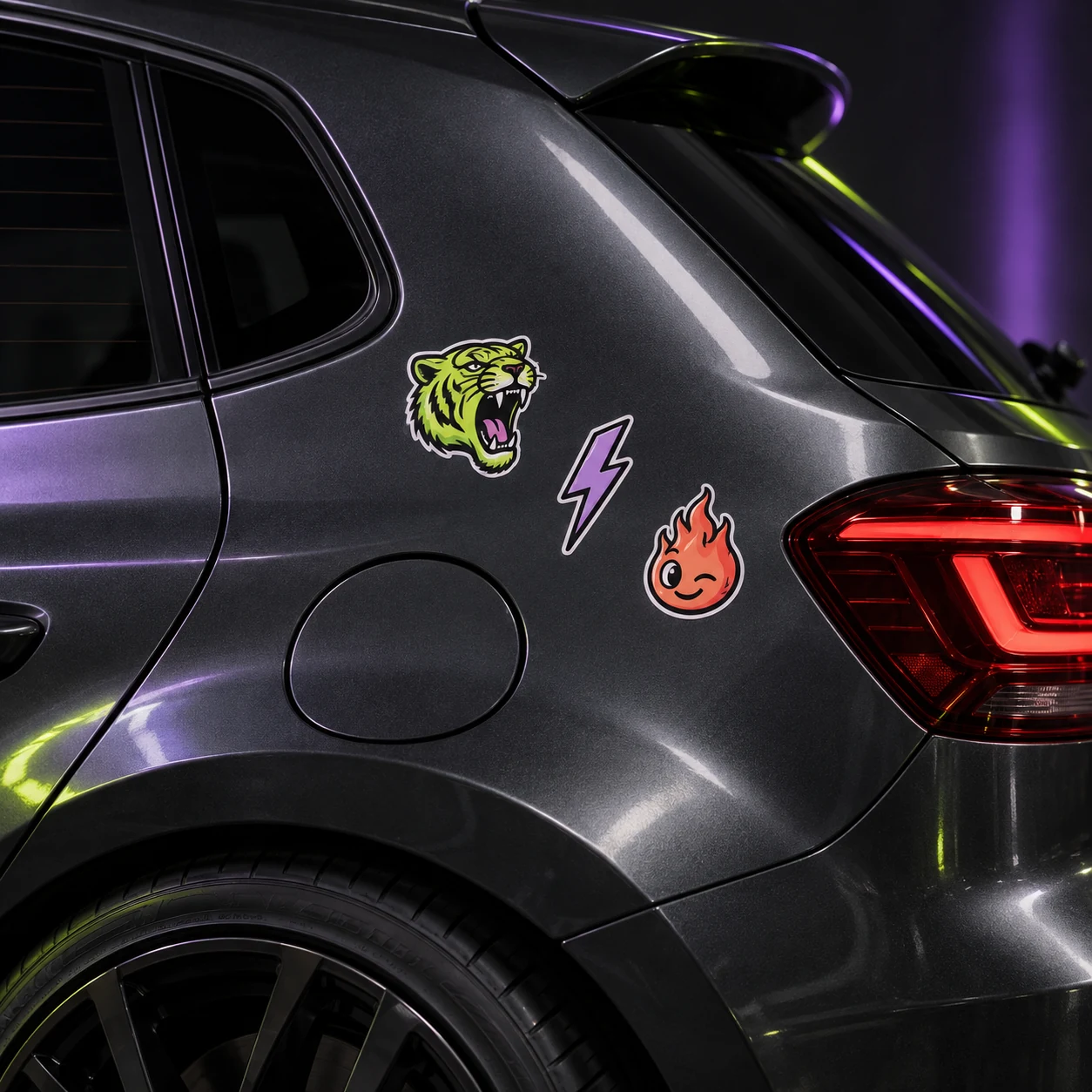
Illustrative scene. Material appearance and application conditions vary.
The difference is in what stays on the surface
A printed PVC car sticker carries the artwork on a piece of film. A conventional cut-vinyl transfer decal uses application tape to position separate cut shapes; after the tape is removed, the intended vinyl pieces remain. The words sticker and decal overlap in everyday use, so check the actual construction rather than relying on the name alone.
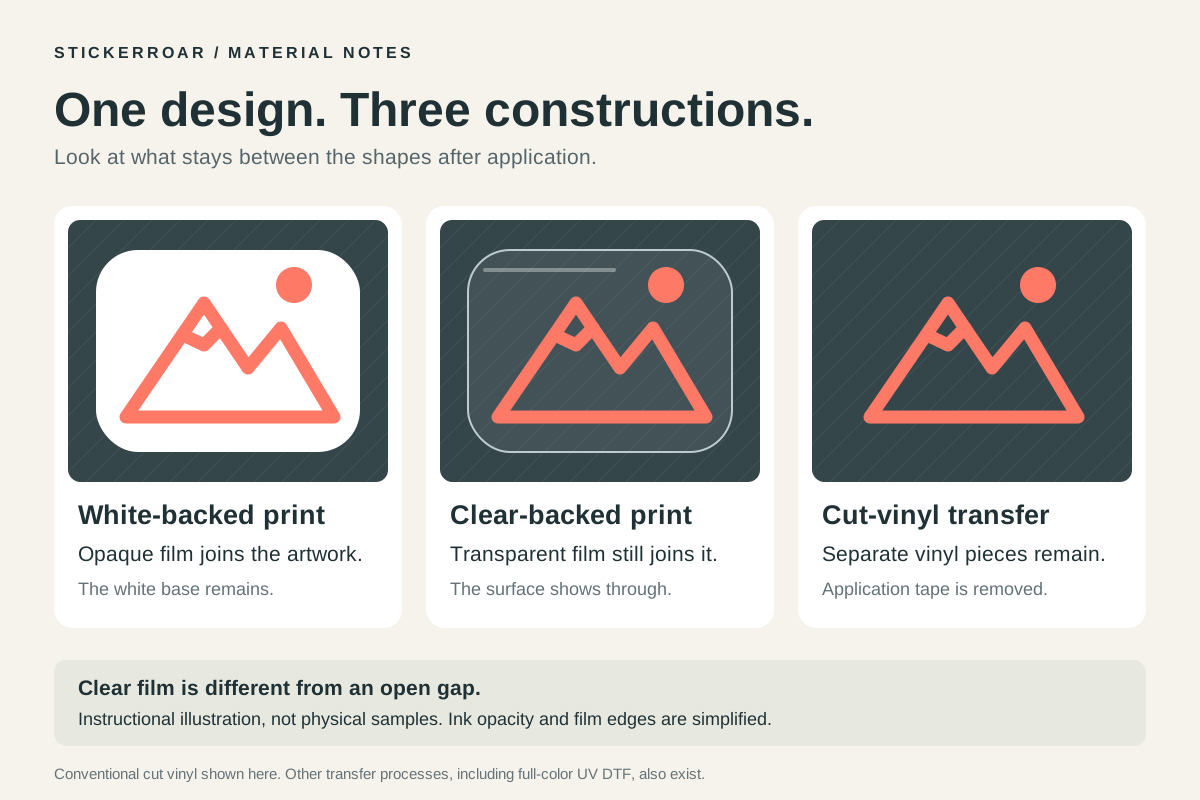
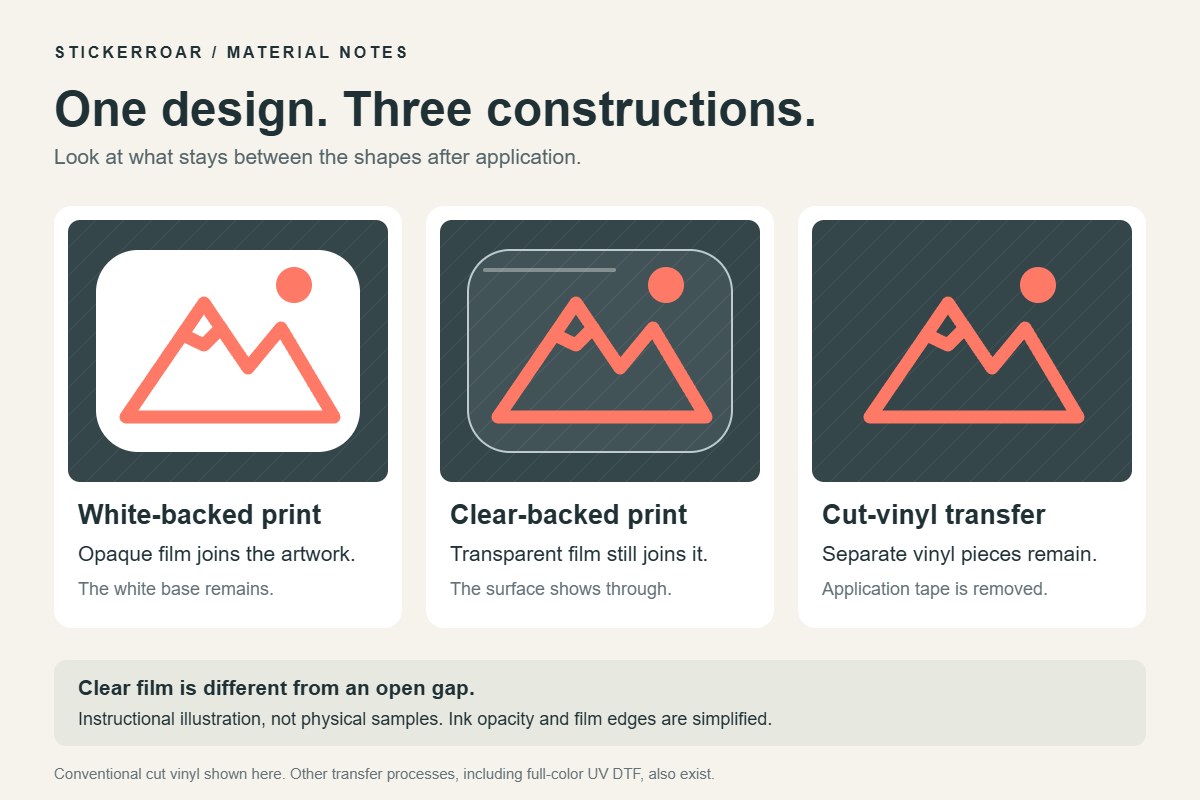
StickerRoar currently accepts requests for printed soft PVC stickers. Our Clear option is a transparent film-backed print. The illustration above compares the same simple mountain artwork in three constructions; it is an instructional diagram, not a photograph of production samples or an offer to manufacture transfer decals.
White-backed print, clear-backed print and cut vinyl
With White PVC, the white base remains inside the final cut shape around the printed mountain. With Clear, transparent film remains inside that shape, including unprinted gaps. You can see the surface through those areas, but the film is still present and its edge or reflections may be visible.
In the conventional cut-vinyl example, the mountain pieces remain after application tape is removed. There is no continuous background sheet connecting them on the surface. The tape is a temporary positioning aid, not the finished background. The actual smallest cuttable detail depends on the material and production method.
Not every transfer uses cut vinyl. Full-color transfer processes, including UV DTF, also exist. Their layer construction, artwork limits and application instructions differ. Ask a supplier which process they mean; neither “transfer” nor “decal” alone tells you the color options or suitability for a car.
Match the format to the artwork
Printed film can carry a multicolor illustration, gradients and lettering together inside one outer contour. Separate details can remain visually separated while the film connects them physically. Confirm whether interior gaps are printed, transparent or actually cut out; those are different outcomes.
Conventional cut vinyl suits shapes that can be cut and handled as physical pieces. Tiny dots, narrow strokes and closely spaced letters need particular review. A fine line that can be printed as ink is not automatically a practical free-standing vinyl strip. Multiple vinyl colors may require separate layers and alignment; check the supplier's process before preparing the file.
White text also needs a clear plan. On White PVC, the base can provide a white area. On Clear, leaving that area unprinted reveals the mounting surface; intentional white lettering may require white ink. Compare White PVC and Clear before deciding.
Application instructions depend on the construction
A film-backed sticker is handled as one connected piece after release from its liner. A conventional cut-vinyl design generally uses application tape to preserve the spacing of its separate parts during placement. Follow the instructions for the actual adhesive, surface and product; do not assume a wet-application method, heating step or cleaning chemical is appropriate for every material.
Before committing to a location, check the usable width and height, curvature and surface condition. Keep visibility and functional parts clear. Use a paper mockup to review size; it does not test adhesion. Our car sticker size guide explains what to measure and how to interpret the preview slider.
What to confirm before requesting your print
- The complete artwork and its actual outer cut dimensions.
- Whether you want an opaque white base or transparent film.
- Which areas should be colored, white or see-through.
- Whether separated shapes remain joined by film or require a different process.
- The intended surface, quantity and any sample requirements.
For a film-backed print, create custom car stickers or start with Clear PVC. Upload your file and review the outline, material and size. Sticker estimates exclude delivery, which is estimated at checkout. You can submit an order request without online payment; final artwork, shipping and production details are confirmed before production.